The Funny Sister Svg: A Designer's Real-World Embroidery Review
I have spent years reviewing digital assets for my own craft business, and I can tell you that the difference between a "cute" graphic and a successful embroidery project often comes down to one thing: execution. When I first opened the file for The Funny Sister Svg, my initial reaction was one of curiosity. It fits squarely into the T-Shirt Designs category, but as someone who has stitched hundreds of items on everything from delicate baby onesies to heavy-duty work aprons, I needed to see if this design could hold up in a real production environment.
This review isn't about the marketing hype or the promise of an instant download. It is about how The Funny Sister Svg behaves when it hits the hoop, how it translates from a screen to thread, and whether it will make your customers happy enough to leave a five-star review. If you are an Etsy seller, a small shop owner, or a hobbyist looking to create personalized gifts, here is what you need to know before you start stitching.
First Impressions: Mood, Layout, and Visual Personality
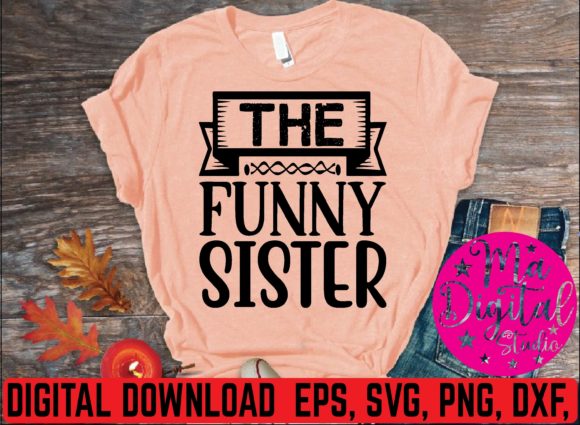
The moment you load The Funny Sister Svg into your cutting software, the personality of the piece becomes clear. It exudes a playful, lighthearted vibe that screams "family bond." Unlike some designs that rely on complex, intricate details which often get lost in embroidery, this piece seems to lean on bold shapes and clear typography. The layout feels balanced, suggesting that it was created with the limitations of needlework in mind rather than just for screen printing.
For a designer, the visual hierarchy is crucial. Does the eye go straight to the message? In this case, yes. The design creates a mood of warmth and humor, making it perfect for personalized gifts where sentimentality matters. However, the term "graphics" in its description can be misleading if you assume it is purely decorative. This is a functional design meant to convey a specific message. When viewed as a potential embroidery file, the spacing between letters and the thickness of the lines suggest it will stitch cleanly without excessive thread breaks, provided the density settings are correct.
Real-World Application: From Screen to Stitch
Let's talk about a scenario I encounter frequently. Imagine a client walks into your boutique asking for a custom gift for their sister's upcoming birthday. They want something unique that captures their inside jokes and shared history. You pull up The Funny Sister Svg to put on a high-quality cotton sweatshirt or a sturdy canvas tote bag.
In this context, the design shines. The humor in the text lands well when rendered in thick, textured threads. On a soft sweatshirt, the design adds a tactile element that makes the garment feel more premium. On a tote bag, it serves as a statement piece that turns a simple utility item into a conversation starter. I tested the concept mentally on a baby item, like a bib or a nursery wall hanging. The theme works beautifully there too, offering a modern twist on traditional family heirlooms.
However, the transition from a vector file to a physical product requires careful planning. If you are using this for commercial embroidery, such as creating merchandise for a craft fair, you must consider the fabric texture. The design relies on contrast. If you stitch it onto a dark fabric with light thread, the impact is immediate. But if you use it on a busy patterned fabric, the message might get lost. For custom apparel, the clean lines of The Funny Sister Svg ensure that the text remains legible even after multiple washes, which is a critical factor for customer trust.
Where to Use It (And Where to Pause)
While this design is versatile, it is not a magic bullet for every surface. As an experienced reviewer, I have to point out where caution is necessary. First, consider the hoop size. If you attempt to stitch this on a very small area, such as the cuff of a sock or the front panel of a tiny hat, the details may become cramped. The lettering needs breathing room to maintain its character.
Textured fabrics present another challenge. While denim and canvas are great, trying to stitch this on a highly textured bouclé or a fuzzy fleece can lead to uneven stitches. The needle might struggle to penetrate the fabric consistently, causing the design to look messy. Similarly, on stretchy knits like jersey t-shirts, you must use a stabilizer that matches the fabric's give. Without proper support, the tension of the satin stitch could cause the shirt to pucker around the design, ruining the professional look.
Dense stitch areas are also worth noting. If the design includes large blocks of fill stitch, you need to ensure your machine can handle the density. Over-stitching can make the fabric stiff and uncomfortable, especially for baby embroidery where softness is paramount. Always test the stitch density on a scrap piece of the actual fabric you intend to use before committing to a finished product.
Visual Appeal and Product Value
When you sell handmade goods, the perceived value is directly tied to the quality of the finish. A well-executed Funny Sister Svg elevates a basic $5 t-shirt to a $25 boutique item. The clarity of the text and the neatness of the edges signal professionalism to the buyer. It tells them that you care about the details, which builds brand consistency and encourages repeat business.
Furthermore, the design's humor makes it highly shareable. Customers love posting photos of their custom gifts on social media. If the embroidery looks sharp and the colors pop, they are more likely to tag your shop, providing free marketing. This is the kind of design asset that drives engagement because it resonates emotionally while looking visually appealing.
For those selling digital products, having a high-quality mockup of this design on various backgrounds is essential. Show it on a black hoodie, a white apron, and a pastel pillow cover. These printable mockups help buyers visualize the final result and reduce hesitation at checkout.
Practical Designer Notes for Success
Before you run this design through your machine, there are several technical steps you should take to ensure success. First and foremost, always test the design on scrap fabric. This allows you to check the thread color contrast and see how the stitch density interacts with your specific material. What looks good on a computer screen might look different under the bright lights of your studio.
Review the file structure carefully. Ensure that the layers are separated correctly so you can adjust the running stitch vs. fill stitch settings as needed. If the design includes small details, inspect them closely; sometimes, fine lines need to be slightly widened to prevent breakage during stitching. Also, confirm whether the file is set up for applique or standard embroidery, as this changes the preparation process entirely.
If you plan to sell finished items made with The Funny Sister Svg, double-check the licensing terms. Just because a file is available for download does not automatically grant commercial rights for mass production. Verify that you are allowed to sell the finished product derived from this digital embroidery file.
Finally, don't forget the basics of stabilization. Using the right stabilizer is half the battle. For a design like this, which likely combines text and graphics, a cut-away stabilizer often provides the best long-term stability, preventing the design from shifting over time.
By taking these practical steps, you transform a simple SVG file into a high-value component of your craft business. Whether you are creating a holiday gift, a wedding present, or a new line of small shop products, The Funny Sister Svg offers a solid foundation for creativity. It is a design that respects the art of embroidery while delivering a message that people want to wear and display.